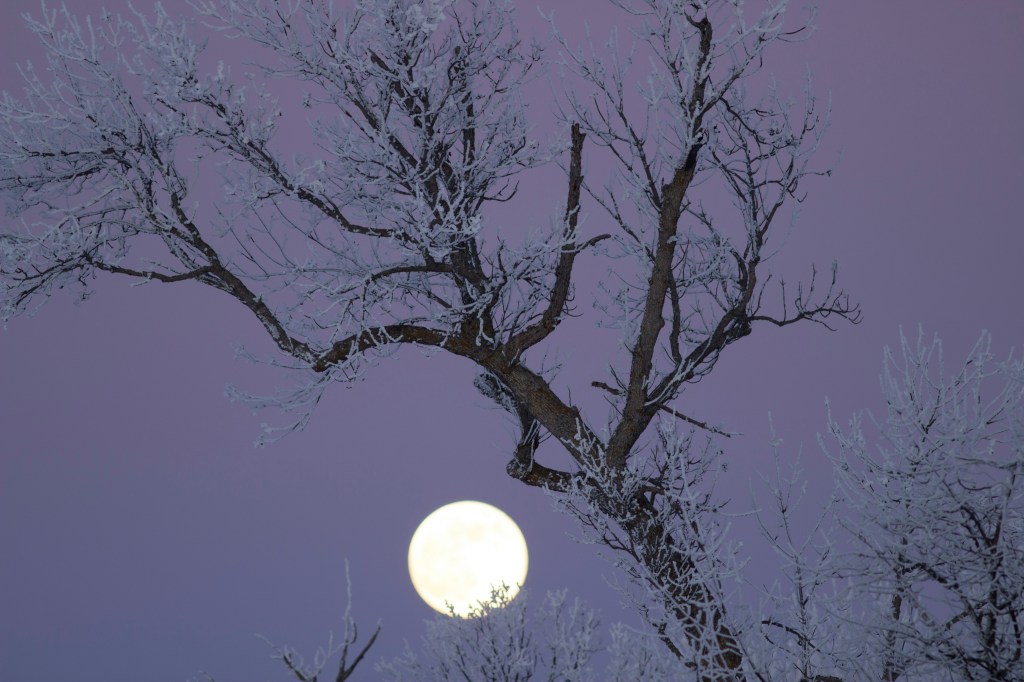
When it rises this evening, December 4, 2025, the full Cold Moon will be a supermoon. Take a walk with me!
Background:
The moon was humanity’s first way of keeping time. Long before watches and wall calendars, people measured days by the moon’s steady rhythm of waxing (growing larger) and waning (growing smaller). In fact, the word month comes from the moon itself, since a lunar cycle, the length of time from one New Moon to the next, lasts about 29.5 days.
Because of this dependable rhythm, cultures around the world have long relied on lunar cycles to mark the year and guide celebrations. The Lunar New Year in China is timed with the first New Moon of the lunar calendar. In India, Holi takes place on the first Full Moon between February and March. In Islam, Eid al-Fitr is celebrated when the first crescent Moon is sighted after the holy month of Ramadan. In Judaism, Rosh Hashanah begins on the first New Moon of fall. And in Christianity, Easter is observed on the Sunday following the first Full Moon of spring.
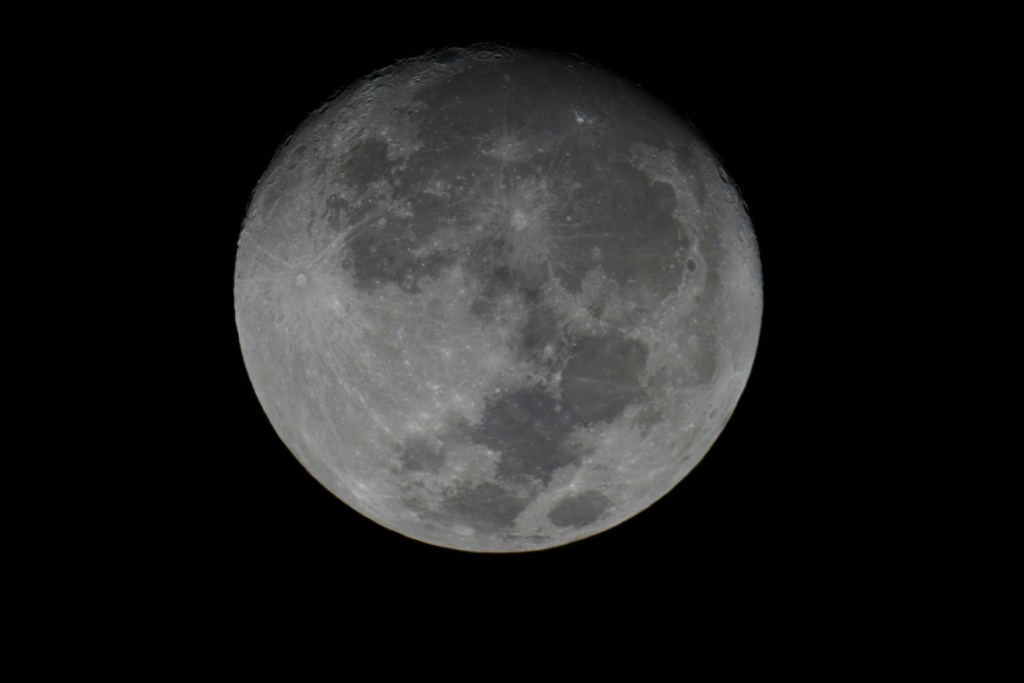
The name for this month’s moon, the Cold Moon, is rooted primarily in seasonal observations made by Indigenous peoples of North America. The term “Cold Moon” most likely comes from the Mohawk people (Kanienʼkehá꞉ka), who named the December full moon for the deepening cold that settles in this time of year. The Haida (and others) also used names tied to winter’s arrival, such as the Long Night Moon, while the Cherokee referred to it as the Moon When the Deer Shed Their Antlers, a seasonal marker tied to deer biology and winter hunting traditions.
The name Cold Moon was later popularized in the English-speaking world through the Old Farmer’s Almanac, which drew on European, Anglo-Saxon, and some Native American naming traditions for the monthly full moons. Two names that I’m particular drawn to from outside North America are the Watcher Moon and Frost Moon. The Watcher Moon was named in some European folklore to remind us that it is a time of reflection before the year’s end. In Japan, it is known as the Frost Moon, or Shimotsuki no Tsuki, because it reflects frost-covered fields and the beginning of deep winter in the agricultural cycle.
When it rises this evening, December 4, 2025, the full Cold Moon will be a supermoon. A supermoon occurs when the Moon is at its perigee, when its orbit brings it nearest to us here on Earth. It appears larger and brighter to us, particularly if you are lucky enough to see the moonrise. You can make your own luck by checking the time the moon will rise in your area by using the Old Farmer’s Almanac’s moonrise and moonset calendar.
Activity:
Simply take a night time walk! Allow some time to settle into the night around you. Do your senses feel different when you’re not able to see as well? How do the smells, sounds, and colors of night differ from those of daytime?
Extension Activities:
Winter’s Night Sound Map: create a drawing or poem capturing what you hear and feel when listening to or imagining the night sounds.
Moon Journal: Over the next month, observe the moon each night (or as often as weather allows). Sketch its shape, note its position in the sky, and record any changes in brightness, color, or time of rising. Pair your observations with short reflections each time of how the moon makes you feel, note anything interesting happening in nature, or describe any moods the moon inspires.

 The Mindful Naturalist
Leave a comment