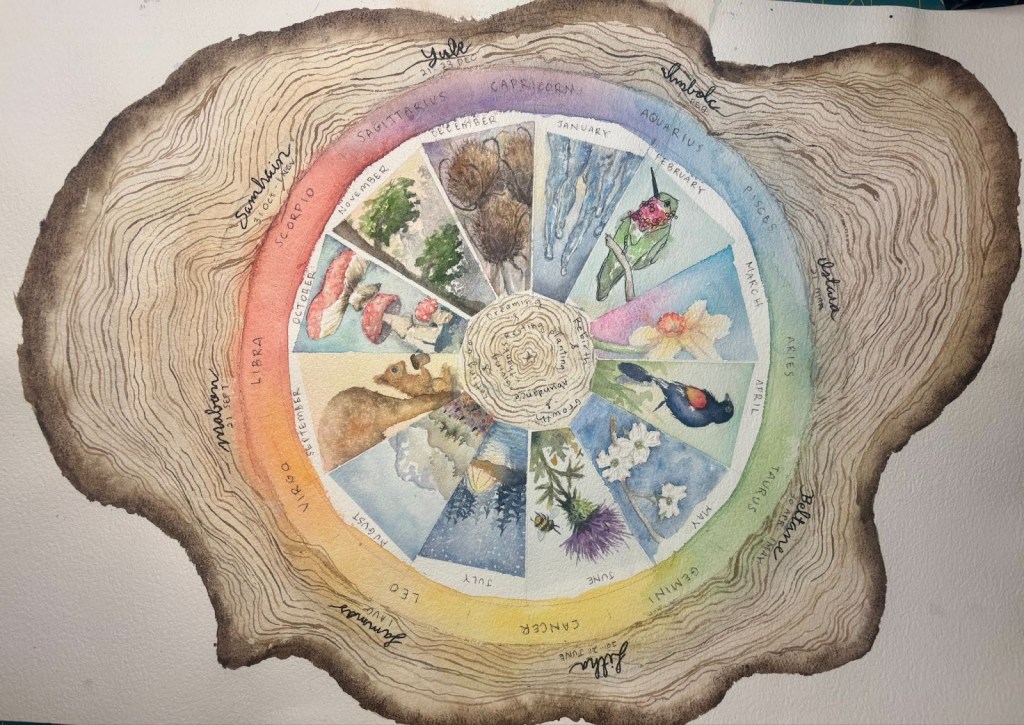
The year moves in a circle, not a straight line. Long before we mark time on calendars, the natural world measures it in returning light, swelling buds, migrating wings, ripening fruit, and the quiet rest of winter. Each season carries its own cues, rhythms, and small wonders; some loud and obvious, others easy to miss unless we slow down and look closely.
A Phenology Wheel offers a way to walk alongside the seasons as they unfold, paying attention to what is happening right now in the place you live. Rather than rushing ahead or looking back, it invites you to notice the patterns of change as they pass through the year, one month, one moment, one observation at a time.
The Phenology Wheel
I like to think of phenology as simply the study of phenomena. What do you notice around you? What is capturing your attention? A Phenology Wheel is simply a framework for recording the things that capture your attention. In a showy season like spring, that might mean noticing leaves unfurling, insects emerging, or birds, fish, and mammals beginning their migrations. In a quiet season like winter, there are still small, meaningful shifts waiting to be seen. A Phenology Wheel is a way to nurture your observation practice: The more you look, the more you’ll see.
Activity:
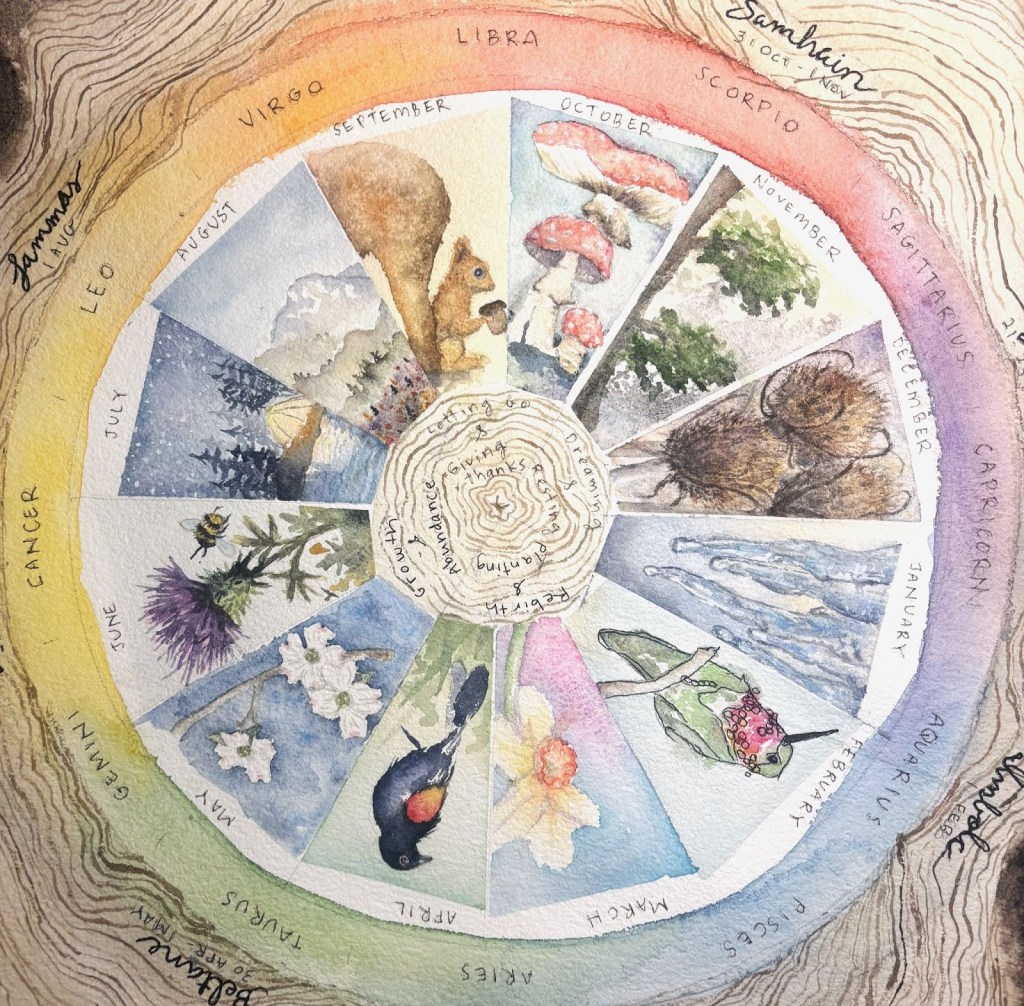
Keeping a Phenology Wheel is a charming and creative way for you and your family to connect both with nature and with each other. To use this wheel, spend some time each month drawing or painting your observations from that month. You might want to focus on one species or even one specimen, like a tree or shrub, for the entire year. You could also focus on the overall changes you see, or the general mood or vibe of each month.
You can gather together as a family, with your nature journaling group, or on your own to spend some time exploring outside and then record something that caught your attention at that moment in time. You can work individually or together – this is a great activity for different levels and ages where everyone can work at their own pace adding as many or as few details as they wish.
By the end of the year, you’ll have an artistic and deeply personal record of your observations, as well as a reflection of the time you spent outdoors together. It’s also a practice you can return to year after year. You’ll notice that many of the same things happen again and again, yet they never feel quite the same. Each season brings surprises, and the more you practice noticing, the more you’ll see.
PS You don’t have to start in January. Start where you are.
Feeling stuck about what to sketch into your wheel for the month? Here are some ideas to get you started:
- What has felt especially abundant in nature this month?
- Did you notice a particular plant, animal, or insect you’d like to remember?
- What moment would you want your future self to recall?
- Did you observe something that feels specific to your place?
- What changes do you notice in your backyard, garden, or local park over time?
- Is there something you’re always drawn to when you go outside—a mushroom fairy ring, the way maple seeds spin in the wind, or a familiar birdsong?
- Track the sunrise and sunset on the 15th of each month and note how the length of daylight shifts through the year.
Getting Started
- Using a pencil, trace something round that fits on your paper. I used a dinner plate.
- Draw an inner circle just inside the first.
- Divide the circle into four equal quadrants.
- Imagine the face of a clock and sketch in the numbers 3, 6, 9, and 12 at the points of the cross you just made.
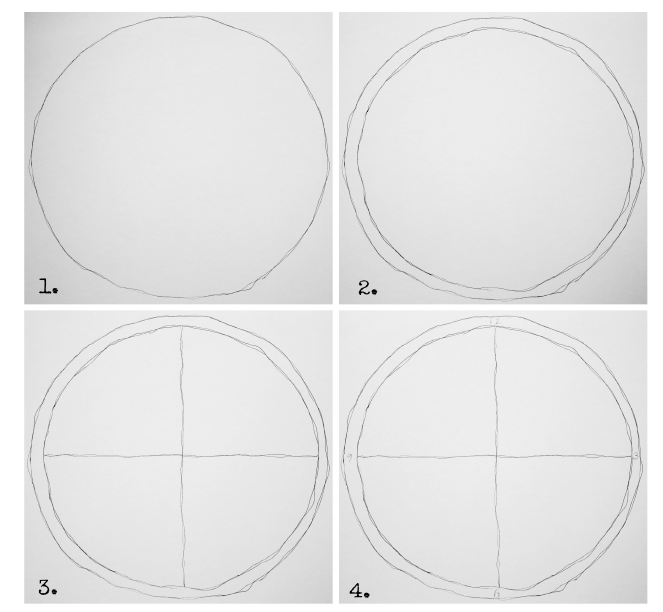
Image from https://raisinglittleshoots.com
5. Fill in the other numbers around the clock face in between the numbers you just sketched in.
6. Draw a line from each number toward the center of the circle. Don’t worry about perfection! You can erase your pencil lines and straighten them out in the next step.
7. Trace a smaller circle in the center of your wheel. I used a coffee cup, but a tape roll or mason jar could work well. You can also edit any of the lines you just made, you may feel you need to readjust to make the space for each month about equal in size. But don’t fuss over perfection!
8. Write in the name of each month for each piece of the pie that you just divided. The inner circle is optional but it can be a place for tracking personal or holidays each month leaving the larger circle for your observations. Or you can just leave it out entirely!
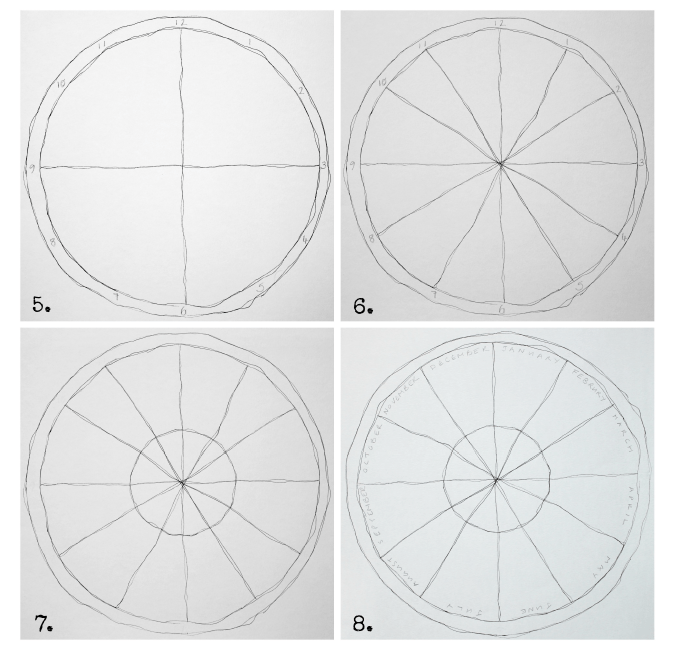
Image from https://raisinglittleshoots.com
- You can choose to color in your outer ring any way that you like. I really enjoyed exploring the rainbow order of the year and was delighted to think about the way that each color was associated with the seasons. Autumn really is orange and red! January and February do feel blue and purple to me. It’s totally up to you! I had also decided to track the Celtic calendar and the zodiac in my wheel. Please feel inspired to track whatever is meaningful to you.
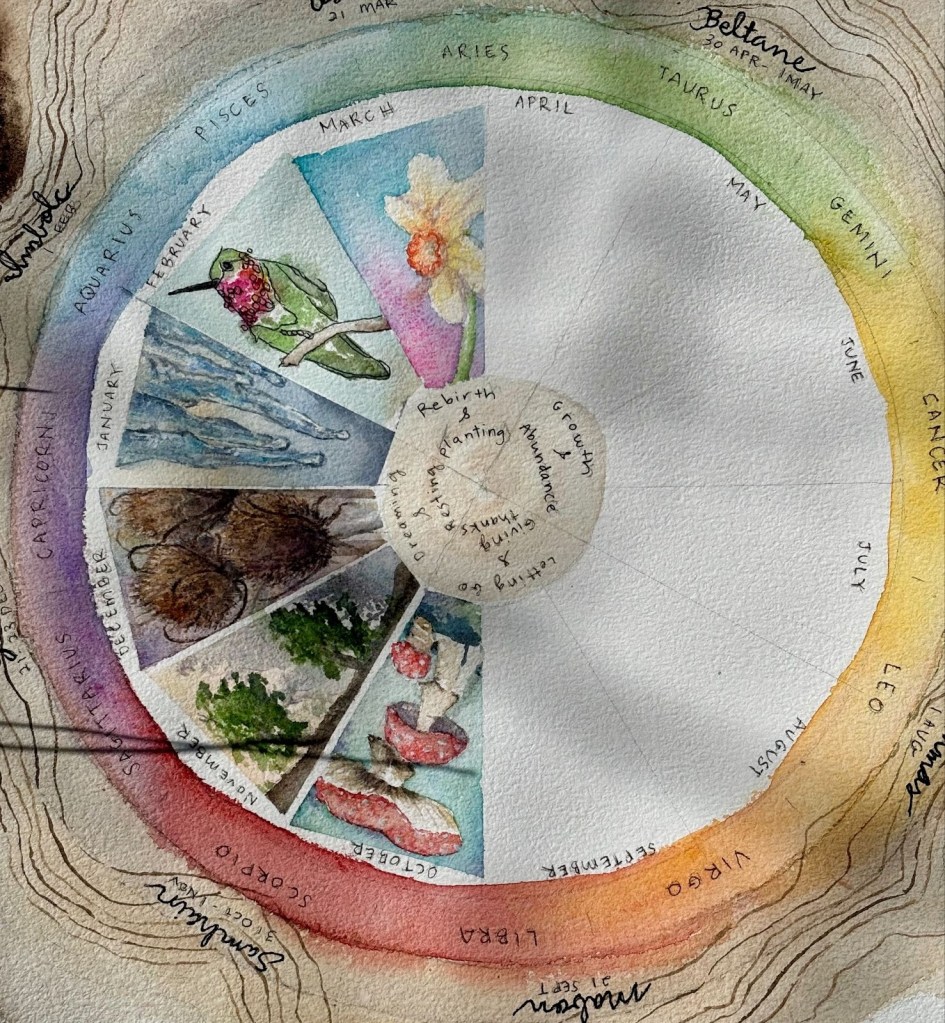
- At the time that I made this particular wheel, I was spending a lot of time thinking about growth rings on trees. There had been an ice storm with 70-80 mph winds that were no match for many of the grand Douglas firs and Western redcedars in my neighborhood. In the following weeks, the sound of chainsaws was the soundtrack to my life. As the trees were cut into smaller pieces to be removed, I found myself drawn to the growth rings of each tree. As I said my goodbyes and gave gratitude to the trees, I found myself imagining the life they lived as I counted their growth rings. I felt inspired to add a cross section of a tree to my wheel to remind me of that time because it was particular to that place and time of my life. You can choose to leave the outside of the circle blank, fill the space with other doodles or poetry or whatever you like!
- If you decide to use watercolor to paint your wheel, I found it useful to use masking tape to keep my paint contained to its own month.

Some other ideas:
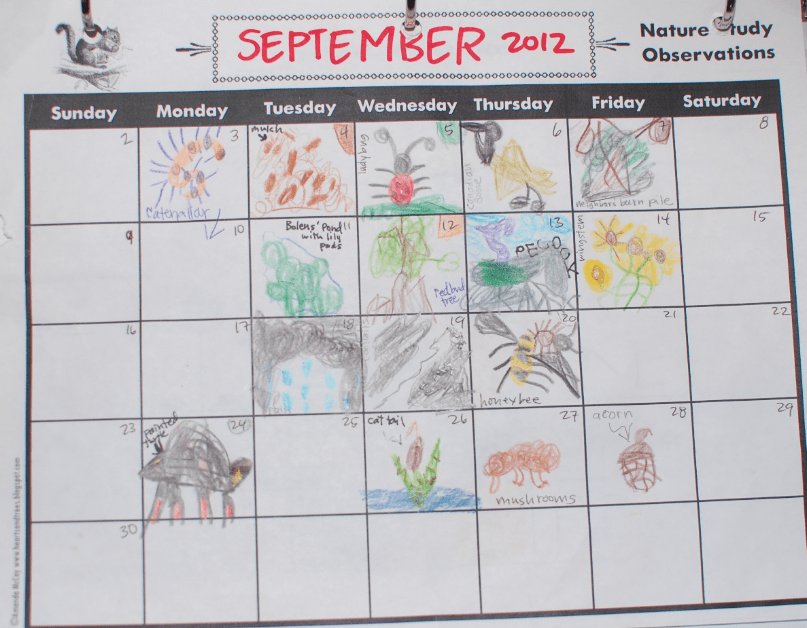
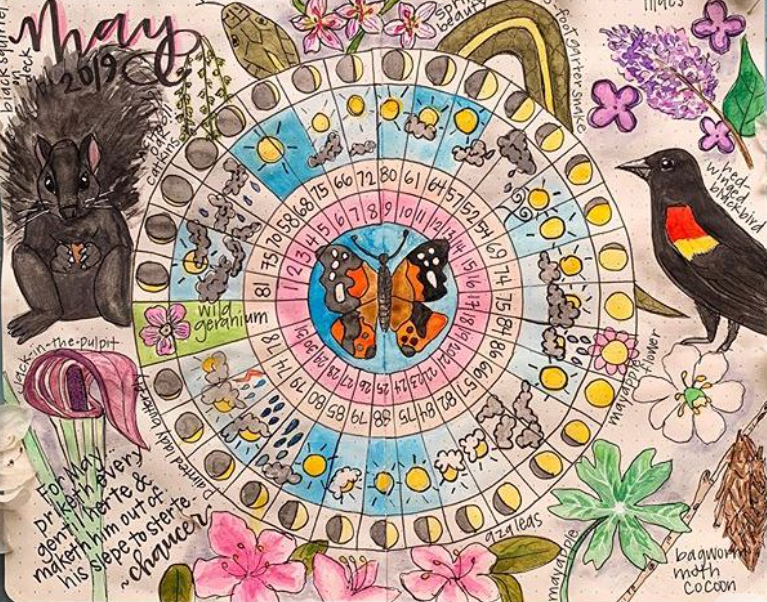
A Daily Dose: Create a month-long phenology wheel or visual calendar and record a daily sketch of something that you notice in your neighborhood. You could stick to one topic like recording the daily weather or moon phase, you could choose a focus of the week like a particular color or a particular aspect of nature (trees, birds, insects, flowers) or you could leave your options open to recording anything that strikes your fancy. Roots and Boots has free printable templates. https://rootsandboots.com/free-nature-journal-resources-for-kids/
Pattern Maps: Compare your phenology wheel observations with others across regions, states, or countries. Use citizen science tools like Nature’s Notebook or iNaturalist to log species data and compare what’s blooming or migrating elsewhere.
Ask a specific question like, “When did the first daffodil bloom here or the first Rufous hummingbird arrive compared to San Francisco, Portland, or Anchorage?” and record your research on a map. Or create a more general Season Tracker Map showing when signs of spring, summer, winter, or fall arrive in different places.
Creature Count:
Pick one location (a backyard, schoolyard, or park) and spend 10 minutes a day observing and recording all living creatures you can find whether they are birds, insects, mammals, worms, or even sea creatures at the beach! Keep tally marks of multiples or simple sketches of each species (crows, robins, chickadees etc). Graph or chart the total number of species seen in a week.

 The Mindful Naturalist
Leave a comment