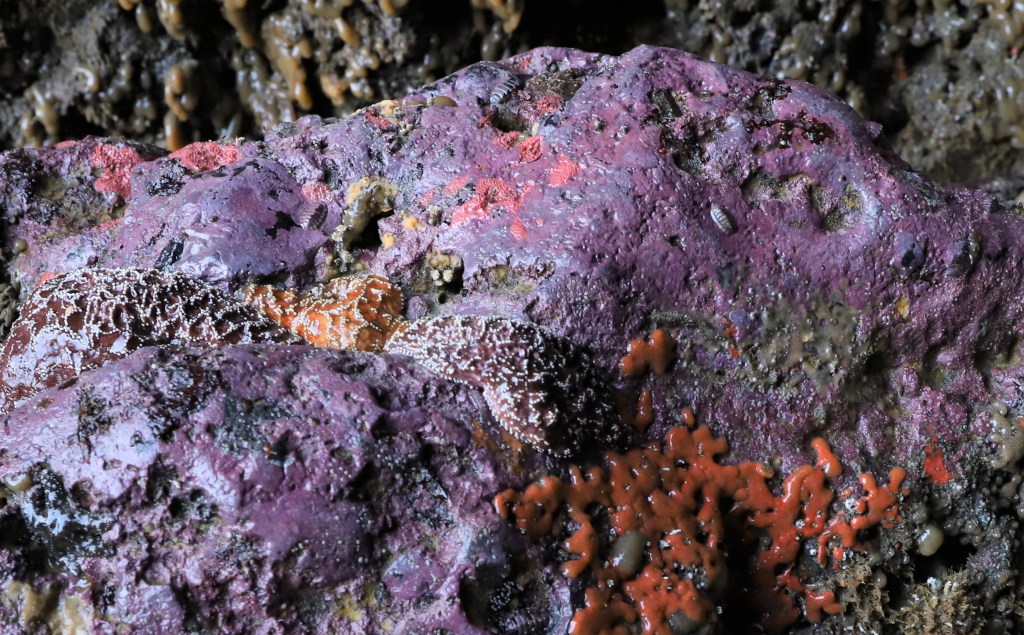
The lowest tides in the winter often occur outside of daylight hours. One of my favorite winter activities is to bundle up, take a strong flashlight, (and a thermos of hot chocolate!) and explore the world that is normally unseen.
There are some minus tides, (aka super low tides!), coming up in the early evenings of January 27- 31st, 2026! Take advantage of the early evening timing to take your young naturalist out tide-pooling!
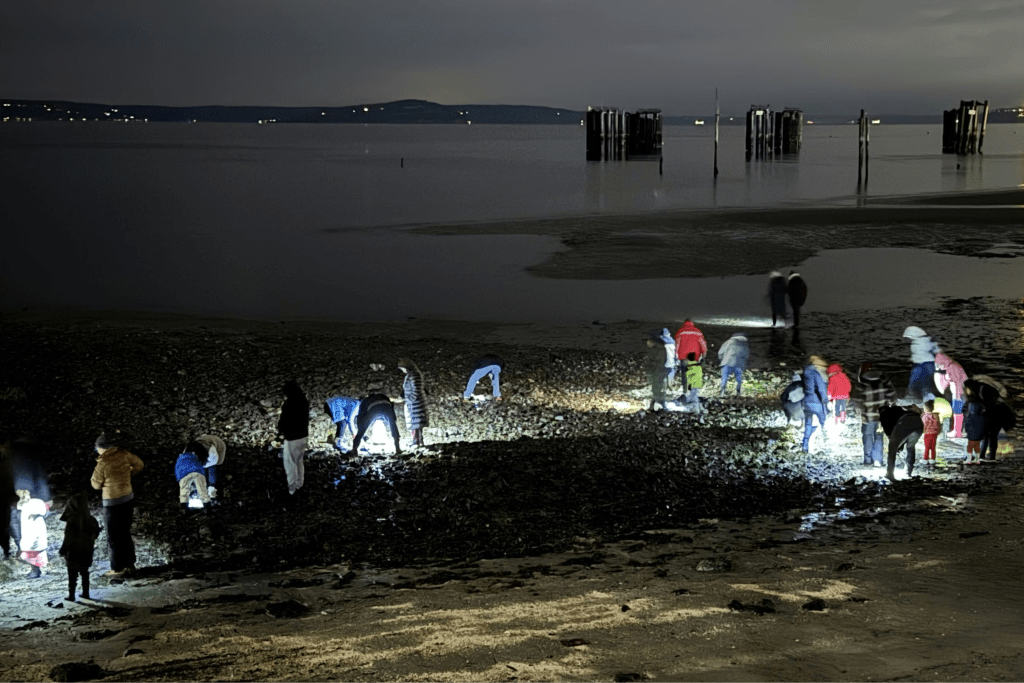
Beachgoers look for tidepool creatures at Olympic Beach on Puget Sound in Edmonds, Washington, on Feb. 8, 2025. Image from KUOW
How Do Tides Work?
Most coastal areas have two high tides and two low tides every day. That happens because of the pull of the sun and moon’s gravity on the water. The sun and moon pull on Earth’s oceans and make the water “stretch” into two big bumps of water, called tidal bulges – one facing the moon, and one on the opposite side of Earth toward the sun. As the Earth spins, places on the shore move through those bulges, and that’s what makes the water rise and fall.
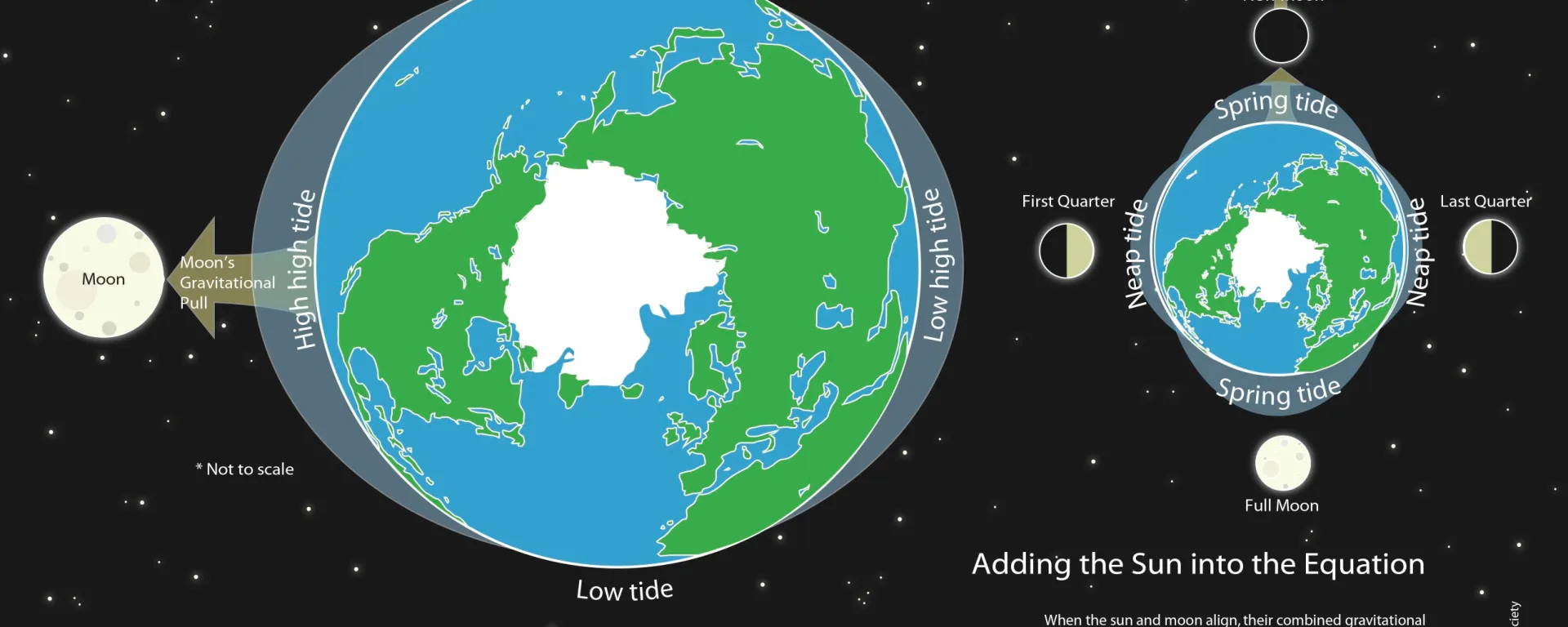
Illustration by Mary Crooks, National Geographic Education
A “normal day” that we measure with clocks is 24 hours long. But tides follow the moon’s day, called a lunar day. A lunar day is 24 hours and 50 minutes long. That extra 50 minutes happens because the moon is moving around Earth in the same direction that Earth spins. Earth has to turn a little extra to line back up with the moon again.
Now here’s where it gets interesting: Earth isn’t standing straight up. It’s tilted on its axis by about 23.5 degrees. That tilt changes how the moon’s pull lines up with Earth’s oceans during different seasons. In winter, the lowest tides of the season happen in early January because the Moon’s position relative to the equator can create stronger tidal effects.
In the Northern Hemisphere during winter, the North Pole is tilted away from the sun. That tilt changes the timing of when different places rotate into the tidal bulges. So, for many coastal spots, the low tide tends to happen during the nighttime hours in winter, while the high tide happens during the day. In summer, that pattern is often flipped!
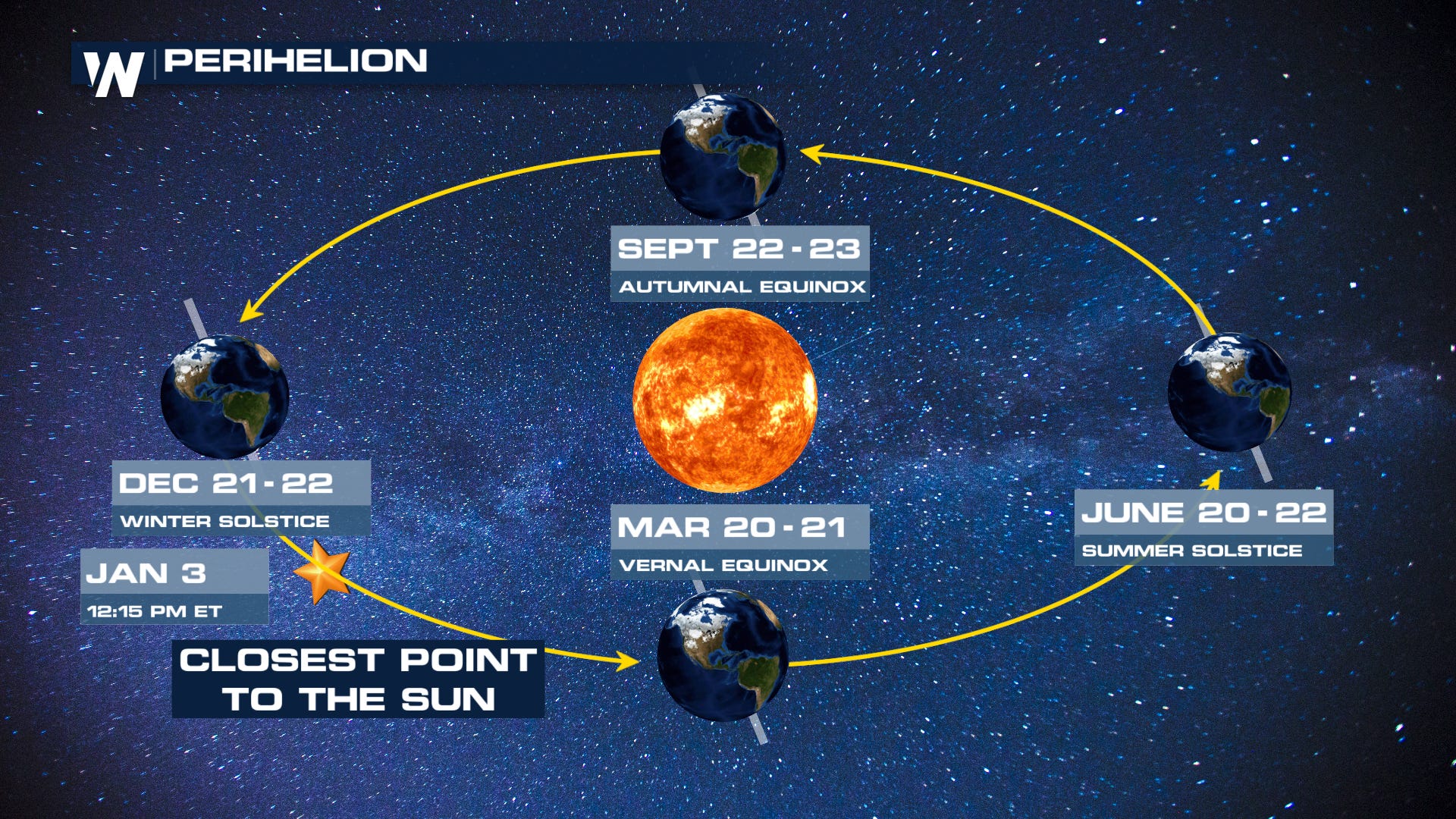
The ultimate influencer: The Sun. Image from Weather Nation
Further influence on the tides comes from the Earth’s orbit around the sun. The orbit is elliptical, meaning it’s not a perfect circle. An ellipse is like an egg shape, wide in the center and skinnier toward the ends. Because of that shape, there are periods when the earth is a little closer to or farther away from the sun. So the moon’s orbit around the earth pulls the tide super low in January and creates minus tides. The position of the earth relative to the sun means that these minus tides happen in the evenings.
So, tides don’t just depend on the moon and Earth spinning – they also depend on Earth’s tilt and the season. That’s why the ocean’s rhythm can feel a little different depending on the time of year.
There’s a lot of cool science to go on and on about when thinking about tides! I’m going to talk about King Tides and the extreme ecosystem of the Intertidal Zone (among other things!) in future posts.
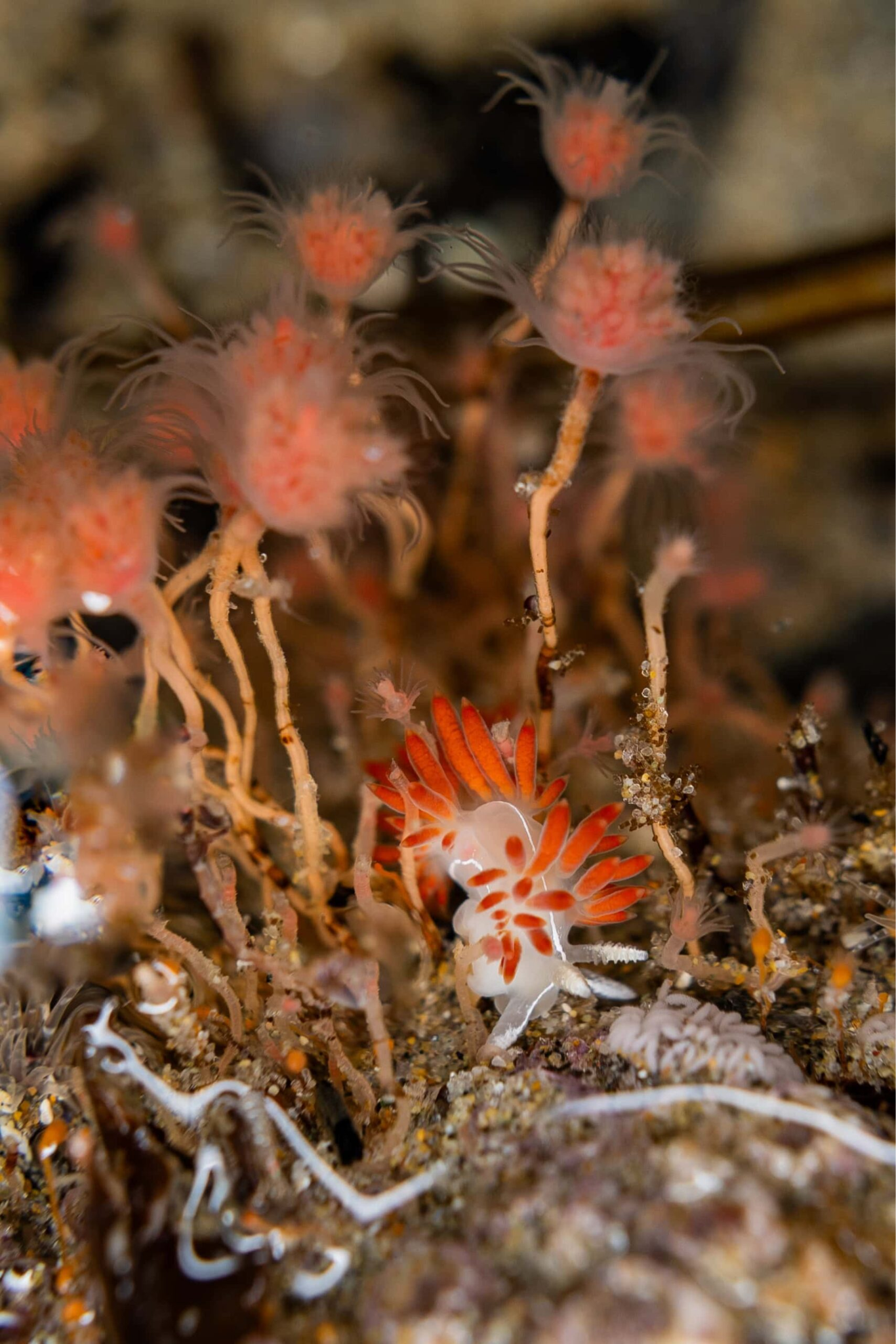
Cockerell’s Dorid nudibranch closing in on its prey, the alien palm tree looking colonial Pink-mouth Hydroids in the background. Image from photographer Miki at Venturing Vows . Follow the link for her suggestions for tide-pooling on the Oregon coast.
What You Can Expect To See: Moon snails, seastars, anemones, barnacles, limpets, chitons, sand dollars, sea snails, hermit crabs, shore crabs, sea slugs (nudibranchs), sea pens, sea cucumbers, jelly fish and many more!
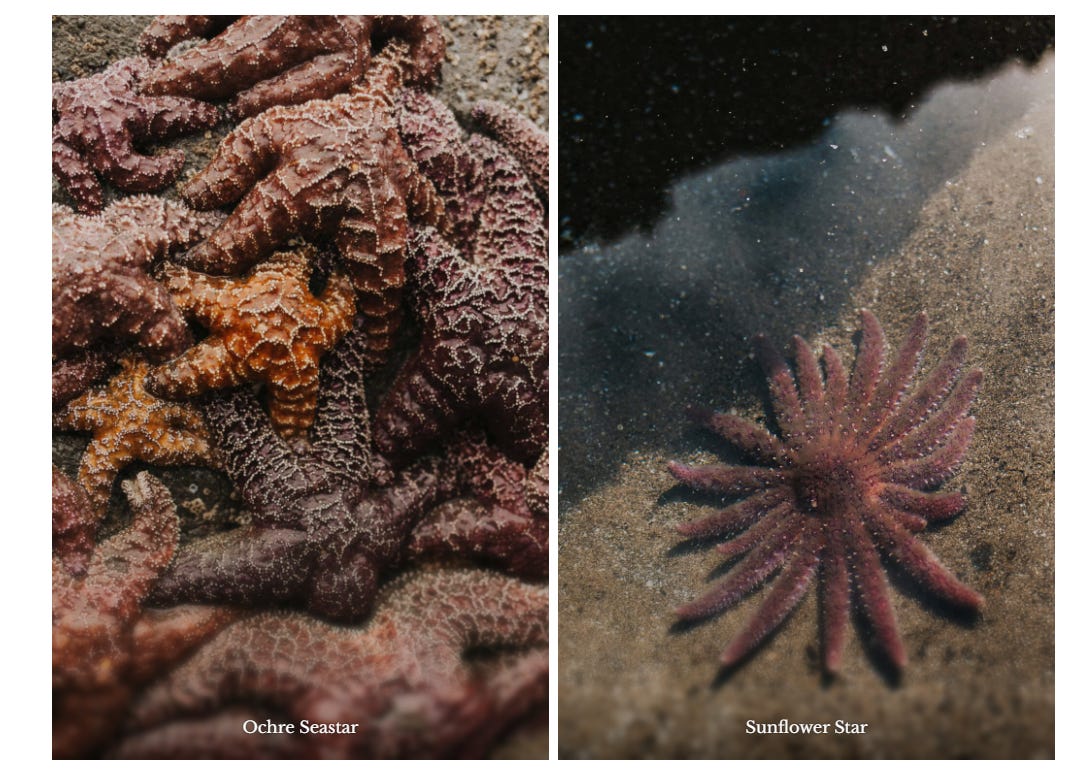
Seastar images from photographer Miki at Venturing Vows . Click the link to see her recommendations for tide-pooling on the Oregon Coast.
Activity: Take a Night-time Low Tide Walk
When to go: The best time to go is about an hour before low tide, which is why the dates of Jan 27-31 2026 with the early evening low tides in the Seattle area are perfect for young naturalists. Check the tide table for Seattle here! For other regions, use NOAA’s guide.
Where to go: Find a place to tide pool! My Seattle area favorites are Carkeek Park, Constellation Park in West Seattle, and Seahurst Park in Burien. The Edmonds ferry dock, Brackett’s Landing, is also great with easy access from the parking lot.
Seattle’s Child Magazine has a list and details of Seattle area tide-pooling locations that are best for kids. The Washington Trails Association has another listing of areas around the coast to go tide pooling with young naturalists.
Along the coasts of Washington and Oregon look for any beach with Sea Stacks or rocky shoreline. I love Dakwas Beach in Neah Bay, Shi Shi and Rialto Beach (but really, any beach in Olympic National Park), Cannon Beach/ Haystack Rock, Pebble Beach at Yaquina Head, Harris Beach in Brookings. I’m crazy about the beaches in the Trinidad area of Humboldt County in Northern California: Agate Beach, Trinidad State Beach and Moonstone Beach are my favorites. Because the Pac NW coasts are so rocky, you’ll have luck almost anywhere.
What to do: Come prepared with realistic footwear like rubber boots with some tread – the rocks can be slippery! Wear clothing that’s appropriate for the weather – there’s nothing more miserable than being with cold kids! A thermos of warm hot chocolate or tea goes a long way. Leave no trace! Return any rocks you turnover to their original position and tread carefully to avoid barnacles, snails, or other sea life on the surface of rocks. Bring a bright flashlight and headlamps to help light up what you’re looking at. Pro tip: Some tide pool animals (like Giant green anemones) are bioluminescent and will glow under a UV light! Bring one along on your night tide pooling and see what glows in the dark!
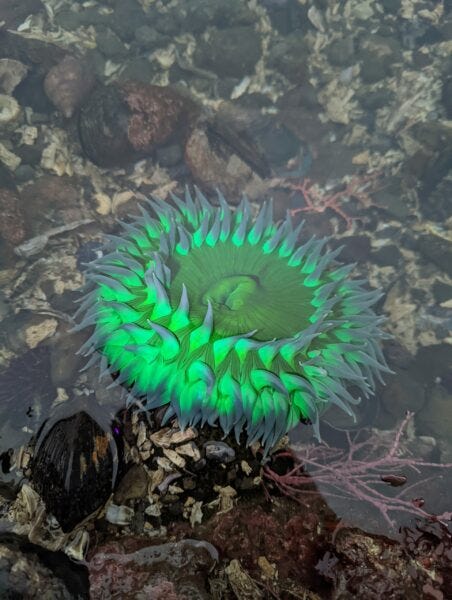
Giant green anemone under UV light image: Natasha Dillinger
How To Know What You’re Seeing: The Seattle Aquarium has an excellent field guide that you can print and take with you and in summer, they often send beach naturalists out to assist you in your tide-pooling adventure! Check their website for more information. For a very thorough preview with phenomenal photography of what to see when out and about in the Puget Sound, check out Our Wild Puget Sound’s web-based resource before you go.

 The Mindful Naturalist
Leave a comment