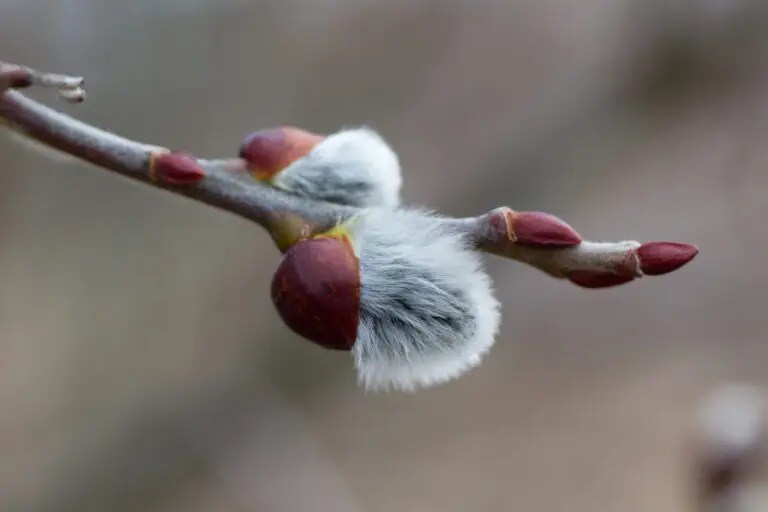
What are you quietly preparing now for a future season of your life, even if no one else can see it yet? Find inspiration in nature’s hopes and dreams.
February 1st marks the midway point between the winter solstice and the spring equinox. Where Yule celebrates the return of the sun, Imbolc on February 1st celebrates its growing strength and the first whispers of renewal. On this midpoint day of winter, let’s take a walk to see how the trees are preparing for spring.
Deciduous trees are those that lose their leaves in the fall. Did you know that they actually create the buds for next year’s leaves in the summer? Trees go dormant in the winter, so they have to prepare for the next year while they still have access to food and energy from the sun to make structures as complex as the cells that will become new leaves or branches or flowers.
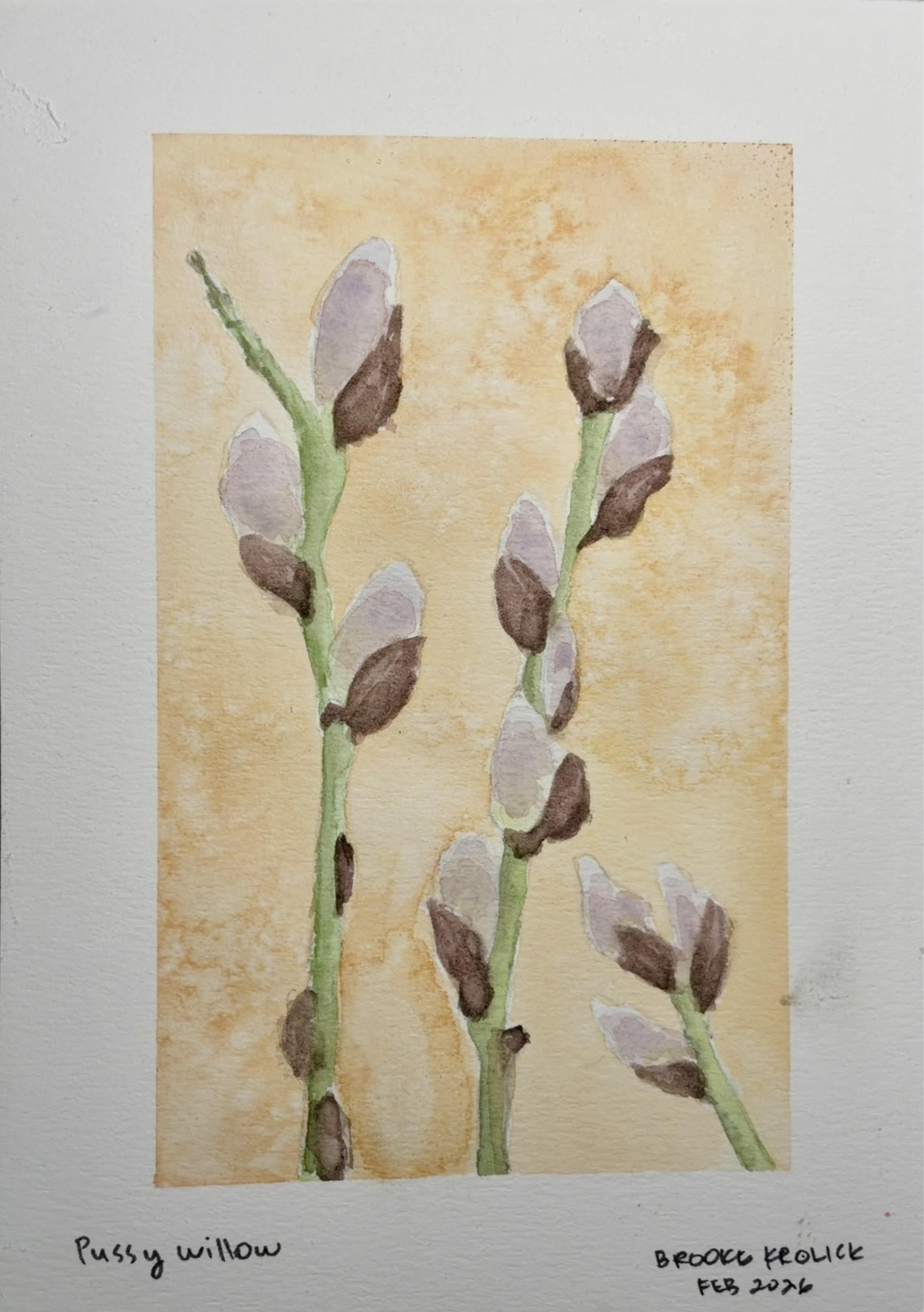
A sketch of pussy willows by the author.
Nutritious tree sap retreats to the tree’s roots for the winter, where it can be protected from freezing. When the spring days get longer and warmer, the sap rises again up to the twigs and branches through the tree’s vascular system. This brings food to those buds that have been dormant all winter long, prompting new growth of leaves and branches.
What even is a bud, anyway? A bud is a small growth on a stem or branch where a plant is preparing to grow something new. That new growth might become a leaf, flower, cone, or an off-shoot that will become more branch or a new stem. On woody plants, such as trees, buds are often hard and covered with tough scales that form a waterproof layer to protect the new life inside. On other plants, buds may be covered in soft hairs or may be completely uncovered. In spring, the new growth pushes out of the bud and begins to grow.
“Jailbreak”
by Maya Spector
It’s time to break out —
Jailbreak time.
Time to punch our way out of
the dark winter prison.
Lilacs are doing it
in sudden explosions of soft purple,
And the jasmine vines, and ranunculus, too.
There is no jailer powerful enough
to hold Spring contained.
Let that be a lesson.
Stop holding back the blossoming!
Quit shutting eyes and gritting teeth,
curling fingers into fists, hunching shoulders.
Lose your determination to remain unchanged.
All the forces of nature
want you to open,
Their gentle nudge carries behind it
the force of a flash flood.
Why make a cell your home
when the door is unlocked
and the garden is waiting for you?
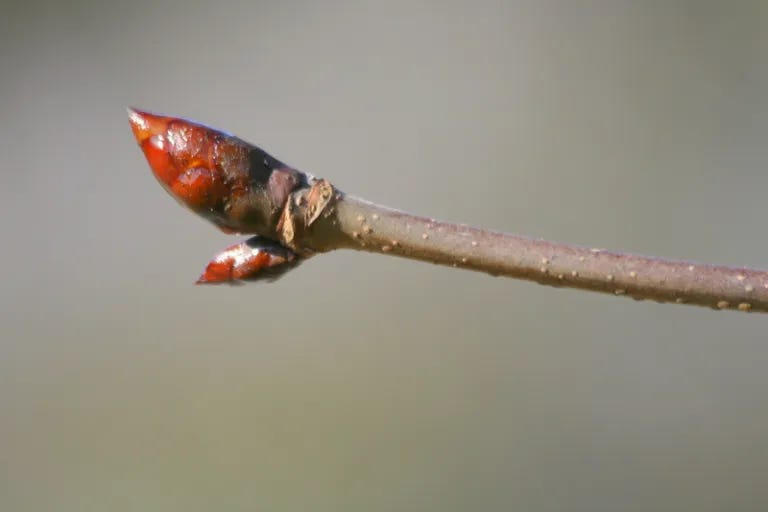
Horse chestnut buds will feel sticky to the touch. Photo by Rosemary Washington
Go for a Midwinter Tree Bud Walk
Grab your nature journal and go for a walk or explore your backyard and choose a tree to study. Once you’ve found your tree, examine its branches closely and look for a bud. When you find one, draw it in your journal and observe it carefully. What does it look like? How big is it? Describe its shape, is it round or elongated? What color is it? How does it feel or smell? Record as many details as possible, as if you were describing it to someone from outer space who has never seen a bud before.
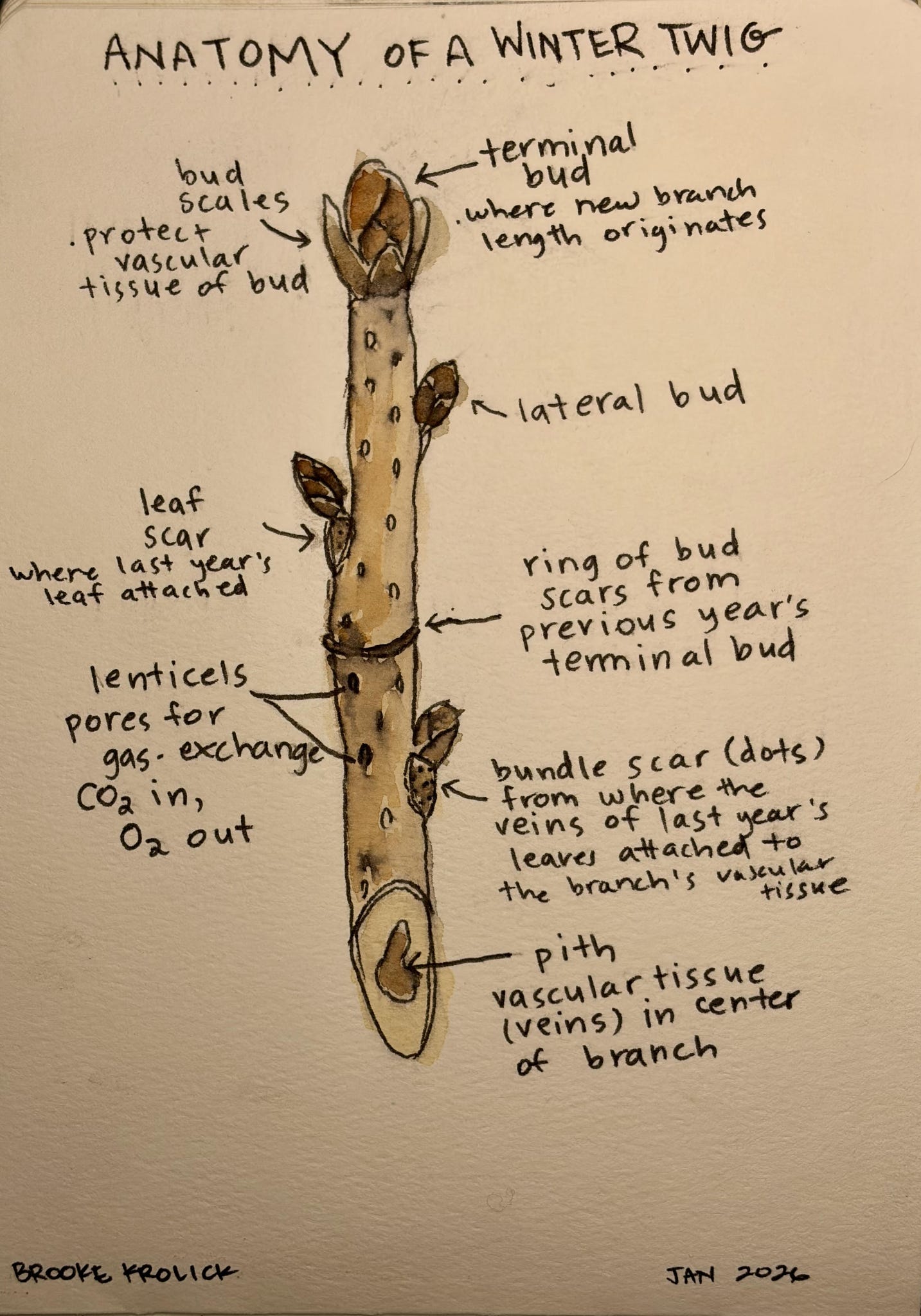
Anatomy of a Winter Twig by the author
Next, note where the bud is growing on the branch. A bud at the end of a branch is called a terminal bud. A bud growing along the side, next to a leaf stem, is called a lateral or axillary bud. Is your bud growing alone, in a pair, or in a cluster?
Now make a hypothesis (a scientific guess) about what will grow from this bud. Do you think it will become a leaf, flower, cone, or shoot? Imagine what it might look like, including its shape and color, and write down or draw your ideas.
Move on to another tree and go through the steps again, then try it with a different type of plant. Be sure to remember exactly which plants you chose so you can revisit them later. Later in the week, return to your buds and make new observations. Have they opened further? Do you notice any changes?
One of my favorite things about this time when the leaves have yet to return is that I can see the remnants of last year’s bird’s nests. As you’re out and about, see if you can spot any of last year’s nests! While we’re thinking about birds, notice the behavior of the birds around you. You’ll likely see the crows working hard to pull twigs and carry them to this year’s new nest site. Anna’s hummingbirds are probably getting ready to sit on their first clutch of little jelly bean eggs of the season. You may see them hovering near spider webs to collect the silk to line their nests so it can stretch to accommodate their growing chicks! The juncos may be gathering grass while the chickadees prefer to line their nests with moss. In the Pacific Northwest’s mild winters, the birds get going early in the season so that when the insects begin to hatch out and the flowers bloom later in the spring, they’ll have plenty of grub to bring back to their growing families.
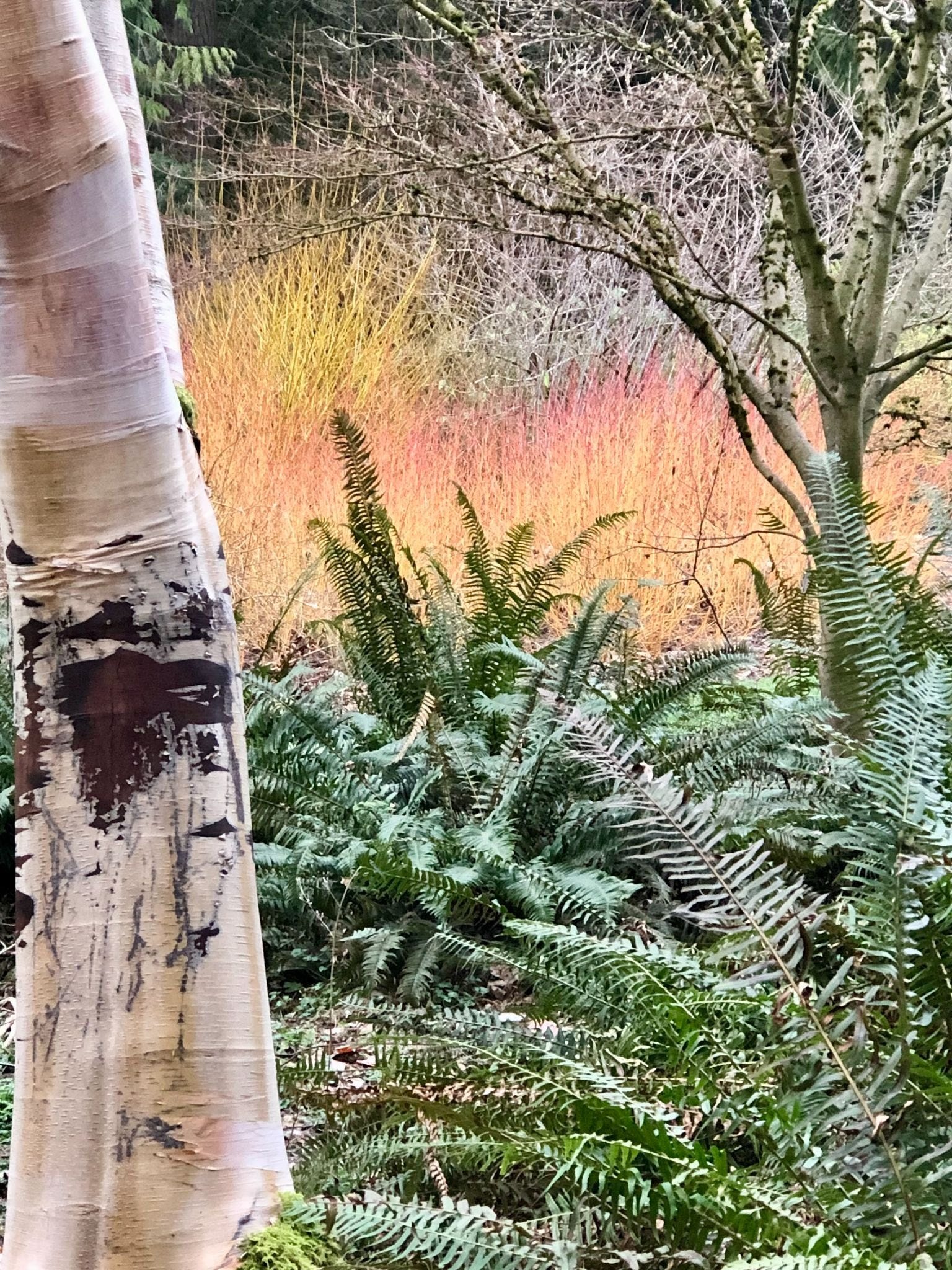
“Midwinter Fire” Dogwood brightens up the backdrop for a birch and ferns in the Winter Garden at the Washington Park Arboretum. Author photo.
Pro-tip: If you’re in the Seattle area, treat yourself to a walk in the Winter Garden at the Washington Park Arboretum. Spend some time mingling with the scent of the witch-hazel and daphne. There is no place I’d rather be on a February day. For about a decade, I taught at a school nearby and I would often walk in the park after school. January and February were my favorite months to be there and that’s saying a lot given their enormous collection of rhododendron, azalea, and cherry blossoms that will be showing their fireworks later in the spring. The textures, colors, and scents of the Winter Garden at its peak are unbelievably rich and 100% worth your time if you’re lucky enough to live nearby.
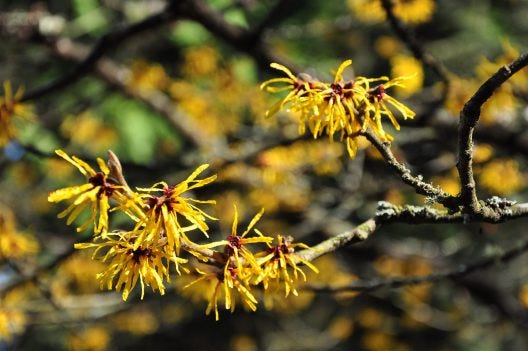
Witch hazel in the Jacob A Witt Winter Garden at UW Washington Park Arboretum. Photo by Univ of Washington Botanic Gardens
If you’d like some help identifying the trees or shrubs that you’ve discovered on your winter tree bud walk, here are a couple of excellent Field ID resources:
Journal Prompts:
After you’ve come home from your walk, sit down with a warming cup of tea and reflect on what you’ve seen. Here are some journal prompts to get you started.
On Preparation & Hidden Work
- What are you quietly preparing now for a future season of your life, even if no one else can see it yet?
- Where in your life are you doing important work beneath the surface, before visible change happens?
- What “buds” have you already formed—skills, ideas, relationships—that may not bloom until later?
On Energy & Timing
- When do you feel most energized and able to create something new?
- How do you know when it’s time to push forward and when it’s time to wait?
- What helps you trust that growth will come back after a period of stillness?
On Renewal & Return
- What signals in your life tell you that it’s time to begin again?
- When you think about the sap rising in spring, what feels ready to move upward in you?
- How might honoring natural cycles of rest and growth change the way you treat yourself?
After reading Maya Spector’s poem “The Jailbreak”
- What kind of “blossoming” might be asking to happen in you this season?
- Are there parts of you that are ready to break open suddenly, like the lilacs in the poem?
- What emotions come up when you read the line “Lose your determination to remain unchanged”?
- What would it feel like in your body to “stop gritting your teeth” and soften instead?
- What fears or beliefs act like a jailer—even if the door is already unlocked?
- How do you usually respond when change begins to push its way in?
For the kids:
- If you were a tree this year, what season would you be in right now?
- What is one thing you’re growing that hasn’t shown up yet?
- What helps you feel rested enough to grow again?

 The Mindful Naturalist
Leave a comment