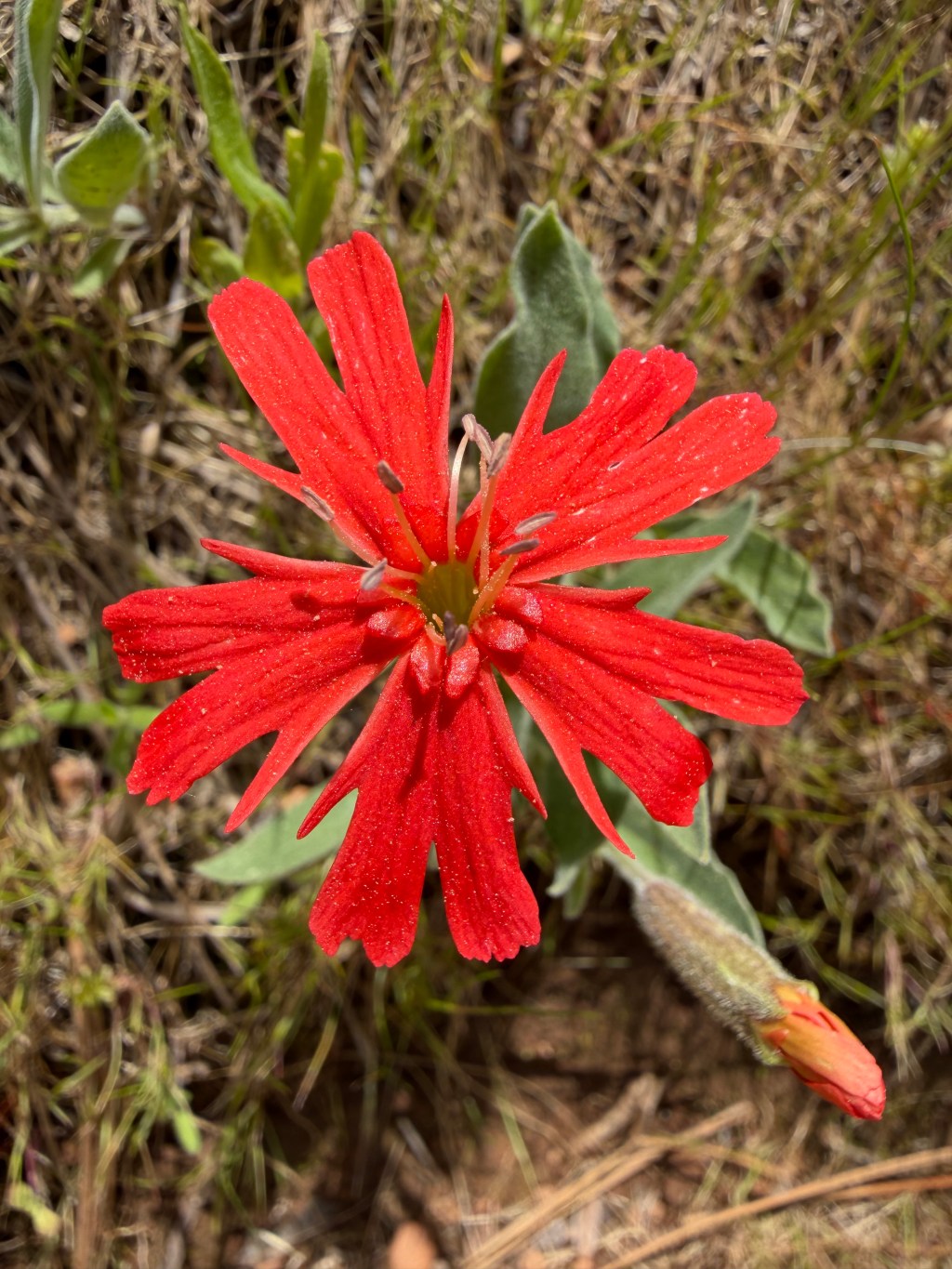
Last weekend, in a flash of copper and urgency, I spotted my first Rufous hummingbird of the season. He startled me with his familiarity, like a friend arriving right on time, and just as quickly he stirred a humble realization: I haven’t been paying close attention to my “Firsts” this year. I recall noticing the swallows over the lake in early March, their swift arcs across the water, but it didn’t quite register that I was witnessing a First. The same with the fluttering blue wings flashing in the sunlight from the puddling azure butterflies at the lake last weekend. These moments passed without being marked, and something about that feels like a missed opportunity. I don’t mean as part of my bird list or as a data point. I’m not here just to record events. My purpose on Earth is to notice with a capital N.
Nature Journaling Activity: Keep a Calendar of Firsts
Keeping a calendar of firsts is a simple but powerful way to root yourself more deeply in the living world. It is an invitation into phenology, which I like to think of as the study of natural phenomena. Scientists might call it the study of recurring natural cycles and the relationships that happen between species within those cycles. It reminds us that nothing in nature happens in isolation. It’s the way nature’s appointment book works. Western tent caterpillars emerge from eggs laid last summer shortly after the alders and maples begin to leaf out in spring. Southern Resident Orcas follow the early-run Chinook salmon as instinct drives them to gather and run up the Columbia River to spawn. Chickadees time their nesting so that their chicks’ hatching coincides with the surge of insects in late spring needed to feed their young. Black bears rely on cues like increasing day length and warmer, rainy weather (which, in turn, signals the availability of food sources like Douglas fir cambium) for emerging from hibernation. Each unfolding event is both a response and a signal, part of a larger, interconnected rhythm that is always in motion around us.
Recording the first occurrence of these moments – your first frog call, the first alder catkin, the first crow carrying nesting material, the first salmonberry blossom – creates a thread you can follow from year to year. Over time, patterns begin to emerge. You start to anticipate, to connect, to recognize not just what is happening, but why and when. It becomes a practice of attention as much as a practice of record-keeping. And perhaps just as importantly, it draws you outside. I notice a subtle, yet eager motivation in wanting to catch sight of those first glimpses. To be present for the turning of the season. And once you are outside, paying attention, there is always more to discover.
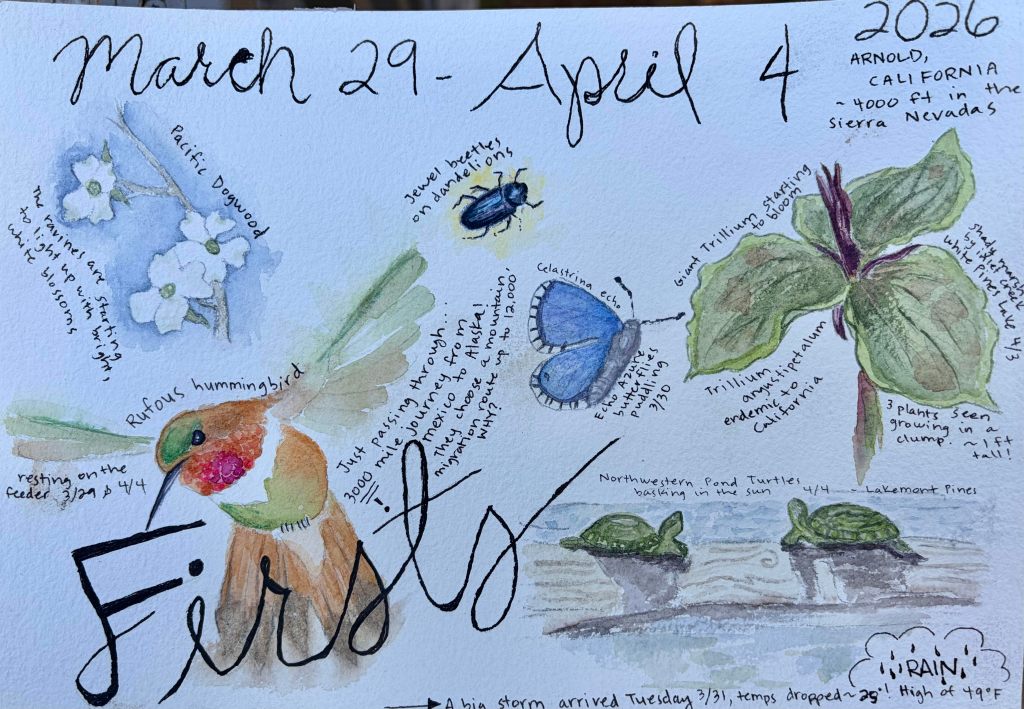
A page from my nature journal. I’m really unhappy with the way the photo captured color here. If you know what you’re doing, I wouldn’t say no to help with digitizing my artwork!
A calendar of firsts gives shape and purpose to daily walks and small excursions. It builds anticipation and memory, turning ordinary moments into markers of time and meaning.
Your own calendar can be as simple or as detailed as you like. You might record the first bloom of a favorite wildflower (hello, trillium!), the return of migrating warblers and flycatchers, the first buzz of a queen bumble bee, the shedding of thick winter coats in elk or deer from heavy, dull protection to sleek, vibrant renewal, or the arrival times of the Gray whale migrations along your coastline as they head north for their summer feeding grounds. You might note when trees begin to leaf out, or when the first thimbleberry or salmonberry ripens. Over time, you’ll begin to see your yard, your neighborhood, your familiar paths, not as static, but as part of a living, changing system.
Starting it doesn’t need to be complicated. Honestly, the simpler it is, the more likely you are to keep up with it. Think of it less as a formal project and more as a habit of noticing that gently grows over time.
Here are some grounded, doable steps to begin:
1. Choose your format
Pick something you’ll actually use. This could be a small notebook, a wall calendar or pocket planner, a dedicated section in your nature journal, or even a notes app on your phone. Some people enjoy creating a year-at-a-glance grid, while others prefer dated journal entries with more detail. This past week, I just pledged to be present for one week and created a page in my journal to illustrate and highlight my Firsts in this one week of early spring.
2. Start with what you already notice
You don’t need to know everything. Begin with obvious, exciting moments: your first frog call, first pussy willow, first camas bloom, or simply the first warm day that feels like spring. Let your curiosity lead rather than trying to track everything all at once.
3. Record three simple details
Each time you notice a “First,” jot down:
What you observed
When (date)
Where (even just “backyard” or “neighborhood park”)
You can always add more details like weather, sketches, or reflections, but these three create a strong foundation.
4. Build it into your routine
Attach the practice to something you already do: a daily walk, morning coffee, or time outside with your kids. The more regularly you’re outside looking, the more Firsts you’ll catch.
5. Keep a short “watch list”
Write down a few things you’re hoping to notice: swallows returning, buds opening, bees emerging, berries ripening. This gives your attention somewhere to land and builds anticipation.
6. Revisit the same places
Go back to familiar trees, patches of flowering plants, or simply follow your regular walking route to the light rail station on your way to work. Patterns become visible when you observe the same place over time. It turns the world around you into a living calendar.
7. Don’t worry about missing things
You will miss Firsts. Everyone does. The goal isn’t perfection, its participation. Even noticing after the fact (“these must have bloomed a few days ago”) is part of learning the rhythm.
8. Add small reflections
Over time, include little notes to yourself:
“Earlier than last year”
“Came up right after that pineapple express”
“I think the mason bees showed up the same week as the cherry blossoms”
These are the beginnings of studying phenology. You’re seeing relationships, not just events.
9. Return next year
This is where the magic deepens. When the same season rolls around again, look back. You’ll begin to anticipate: It should be happening soon. That sense of expectation sharpens your awareness and connection.
10. Let it stay joyful
Resist turning it into a chore or checklist. A calendar of firsts is ultimately about wonder. It’s about catching those small, fleeting moments when the world quietly shifts.
While this primer has been focused primarily on events in the spring, that’s only because that’s the season I’m writing this in. You can clearly record Firsts throughout the year! The first snow, first V of geese flying south, the first blue-black Oregon grape berries or buttery, white snowberries of winter, the aspen’s first golden leaf quivering beneath an autumn blue sky, or the first fireweed or goldenrod of late summer. Start where you are.

 The Mindful Naturalist
Leave a comment